ByJohn A
How Advanced Materials Are Transforming Manufacturing
Introduction
Across the world, industrial manufacturing has entered a period of immense transformation—driven not only by technological innovation but also by the remarkable evolution of the materials that support modern production. Every sector, from packaging and coatings to electronics and construction, depends on a sophisticated matrix of engineered substances that provide durability, consistency, efficiency, and environmental responsibility. The complexity of today’s manufacturing challenges has reshaped how industries evaluate materials, requiring a deeper understanding of physical, chemical, economic, and ecological factors.
Materials once considered simple auxiliaries are now central to modern industrial strategy. They influence product quality, production speed, sustainability metrics, and the economic resilience of entire manufacturing systems. Even specialized materials occasionally referenced in technical literature—such as compounds categorized near polymer families including PVA—are part of the expansive mosaic that defines contemporary industrial processes. Yet the focus of this article extends far beyond any single material. It aims to explore the comprehensive evolution, scientific foundations, functional demands, and global implications of modern industrial materials throughout the manufacturing ecosystem.
This long-form research-style examination is designed to reflect how industries rely on science-backed materials to achieve the precision and performance required in today’s global economy.
1. The Foundations of Modern Material Science
1.1 Early Manufacturing and Material Limitations
The earliest phases of industrial development relied on wood, iron, wool, cotton, and natural adhesives—materials that were abundant but lacked performance consistency. These substances limited the efficiency of the earliest machines and manufacturing systems, creating boundaries that industries struggled to overcome.
1.2 The Chemical Revolution and Rise of Industrial Formulations
The 19th and early 20th centuries introduced groundbreaking chemical discoveries that laid the foundation for engineering materials. The development of early plastics, synthetic rubber, and industrial resins marked a pivotal shift that allowed manufacturers to move beyond natural-resource constraints.
1.3 Technological Advances and Material Innovation
The invention of advanced polymers, stabilizers, emulsifiers, and composite structures ushered in new generations of multifunctional materials. These advancements allowed industries to enhance durability, reduce production variability, and support more complex product designs.
1.4 Material Science as a Strategic Discipline
Where materials were once treated as commodities, they are now studied through multidisciplinary scientific disciplines involving chemistry, engineering, physics, data science, environmental sciences, and molecular design. Material science has grown into one of the most crucial fields shaping industrial capability in the 21st century.
See also: 24 Hour Painting Services Sydney Transforming Spaces Timely and Professionally
2. Essential Characteristics of High-Performance Industrial Materials
2.1 Structural Strength and Resilience
High-performance materials must demonstrate the ability to withstand repeated physical stress, environmental exposure, and chemical interactions. Whether used in coatings, composites, or industrial films, structural integrity determines long-term performance, safety, and reliability.
2.2 Thermal and Chemical Stability
Industries require materials that maintain predictable behavior when exposed to heat, cold, humidity, or reactive compounds. Stability remains essential for adhesives, protective coatings, electronics, machinery, and even food packaging.
2.3 Processability and Fabrication Flexibility
Materials must adapt to production environments involving extrusion, molding, coating, lamination, bonding, printing, or curing. The easier a material integrates into existing manufacturing systems, the greater its industrial value.
2.4 Sustainability and Eco-Compatibility
Industrial reform has placed sustainability at the forefront. Modern materials must reduce emissions, lower waste, support energy-efficient processing, and comply with environmental regulations.
2.5 Multi-Functional Behavior
Materials today often must deliver simultaneous capabilities: adhesion, film formation, strength enhancement, moisture control, or chemical resistance. Multi-functionality reduces costs and enhances production efficiency.
3. Industrial Sectors Transformed by Material Advancement
3.1 Packaging and Film Engineering
Packaging is among the most material-dependent industries. The global demand for flexible, durable, lightweight, and sustainable packaging has given rise to specialized films, advanced polymer blends, barrier coatings, and environmentally conscious alternatives to conventional plastics.
These developments support food protection, pharmaceutical packaging, delivery logistics, agriculture, and more. High-performance films enable transparency, moisture control, sterility, and convenient printability while supporting recycling efforts.
3.2 Adhesives, Coatings, and Surface Enhancement
Adhesives and coatings represent one of the most technologically dynamic material categories. They influence industrial processes through:
- corrosion protection
- surface modification
- improved bonding strength
- smoother film formation
- enhanced durability
- energy-efficient processing
Modern coating materials are used in automobiles, marine engineering, building construction, aviation, consumer products, electronics, and packaging.
3.3 Textiles and Industrial Fabrics
Textile processing benefits from scientific advancements in fiber enhancement, dye interaction, tensile strength modification, and moisture control. Engineered materials help reduce fiber breakage, support smoother weaving, and ensure fabric quality at scale.
3.4 Construction, Infrastructure, and Civil Engineering
Construction materials now incorporate enhanced composites, structural reinforcements, water-resistant additives, protective coatings, and efficient binding agents. These innovations contribute to safer buildings, longer-lasting infrastructures, and more efficient energy systems.
3.5 Automotive and Aerospace Manufacturing
Transportation industries increasingly rely on lightweight composite materials, advanced polymers, specialty coatings, and heat-resistant compounds. These materials:
- reduce fuel consumption
- enhance mechanical safety
- improve vehicle longevity
- enable electric mobility technologies
3.6 Electronics, Semiconductors, and High-Tech Systems
Electronics manufacturing demands materials engineered for conductivity, insulation, thermal dissipation, and precision microfabrication. Today’s smartphones, automotive sensors, robotics, and medical devices exist because of breakthroughs in material engineering.
4. Technological Innovations Transforming Material Development
4.1 Digital Engineering and Computational Material Design
Advanced simulations and AI-based predictive modeling allow scientists to design materials at the molecular level before physical testing. These tools accelerate innovation and reduce development costs.
4.2 Nanotechnology and Molecular Enhancement
Nanomaterials introduce unique characteristics such as:
- antimicrobial surfaces
- improved electrical conductivity
- higher tensile strength
- self-cleaning properties
- enhanced thermal control
These features transform sectors such as healthcare, coatings, electronics, and environmental engineering.
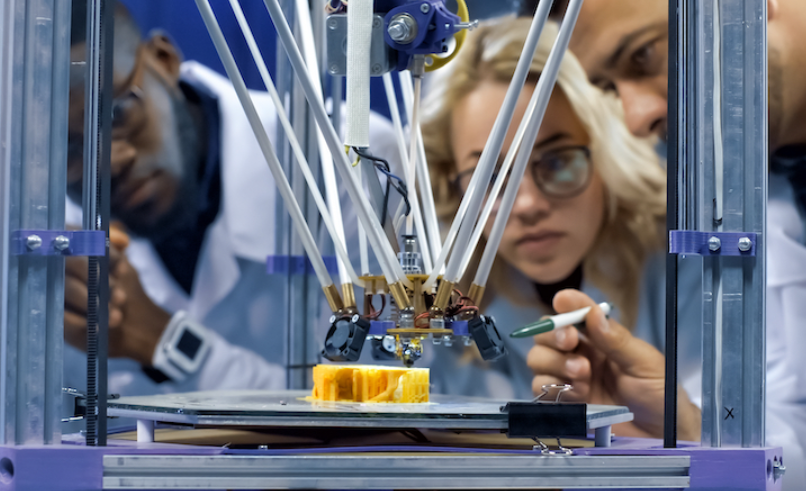
4.3 Additive Manufacturing (3D Printing)
Additive manufacturing allows the creation of complex structures that traditional fabrication cannot produce. This method demands materials capable of precise layering, controlled viscosity, rapid curing, and structural stability.
4.4 Smart and Responsive Materials
Responsive materials change properties in reaction to heat, light, electricity, or pressure. Their applications include:
- biomedical devices
- aerospace components
- robotics
- interactive electronics
- flexible sensors
4.5 Bioengineering and Green Chemistry
Material science increasingly prioritizes renewable, biodegradable, and non-toxic formulations aligned with global sustainability goals.
5. Environmental and Sustainability Dimensions
5.1 Regulatory Pressure and Compliance
Environmental regulations shape material development. Global frameworks require industries to reduce VOCs, eliminate hazardous additives, minimize microplastic pollution, and adopt eco-conscious manufacturing practices.
5.2 Renewable Material Research
Bio-derived polymers, plant-based composites, and natural-fiber reinforcements are central to the next generation of sustainable materials.
5.3 Waste Management and Resource Efficiency
Modern manufacturing emphasizes circular economies that promote:
- recycling
- reuse
- reduced resource consumption
- long-term material durability
5.4 Energy-Efficient Production Systems
Materials compatible with low-temperature processing or renewable-energy-powered production contribute to reduced carbon footprints.
6. Economic and Global Supply-Chain Considerations
6.1 Market Demand Fluctuations
Economic forces, geopolitical events, and resource availability heavily influence material markets. Manufacturers must maintain resilience through adaptable procurement strategies.
6.2 Supplier Reliability and Technical Support
Reliable material supply networks are crucial. Manufacturers often evaluate vendors based on:
- quality assurance
- product consistency
- documentation accuracy
- research support
- delivery stability
6.3 Inventory Optimization
Materials with longer shelf life, stable properties, and efficient storage requirements reduce operational risk and financial overhead.
6.4 Cost-to-Performance Balance
Industries continually evaluate how materials can increase quality while minimizing costs, waste, and processing time.
7. The Future of Industrial Materials
7.1 Ultra-High-Performance Composites
New composite materials will offer unprecedented strength-to-weight ratios for aerospace, transportation, and construction.
7.2 Custom-Engineered Polymers
Advancements in chemical engineering allow scientists to design materials with specific functional profiles—enabling optimized industrial performance and tailored solutions.
7.3 Integration With Robotics and Intelligent Manufacturing
Industry 4.0 and Industry 5.0 rely on materials compatible with automation, robotics, and intelligent processing systems.
7.4 Next-Generation Coatings and Surface Technologies
Future coatings will exhibit:
- self-healing characteristics
- increased corrosion resistance
- thermal adaptability
- energy efficiencies
7.5 Materials for Renewable Energy Systems
Solar energy, battery technology, hydrogen systems, and sustainable infrastructure depend on material breakthroughs for scalability and efficiency.
Conclusion
Modern industrial development is built on the foundation of scientific innovation in materials. From polymers and composites to advanced coatings and functional additives, the materials shaping today’s production systems are more sophisticated than at any point in history. Industries depend on materials that deliver stability, adaptability, sustainability, and long-term reliability. The rapid evolution of digital engineering, nanotechnology, bio-based alternatives, and precision manufacturing ensures that material science will remain at the forefront of global industrial progress.
As manufacturing continues to evolve, materials will determine the rate of innovation, the capabilities of future technologies, and the environmental impact of global production. The next decade will undoubtedly bring even more profound advancements, reinforcing the central role that materials play in shaping the modern world.