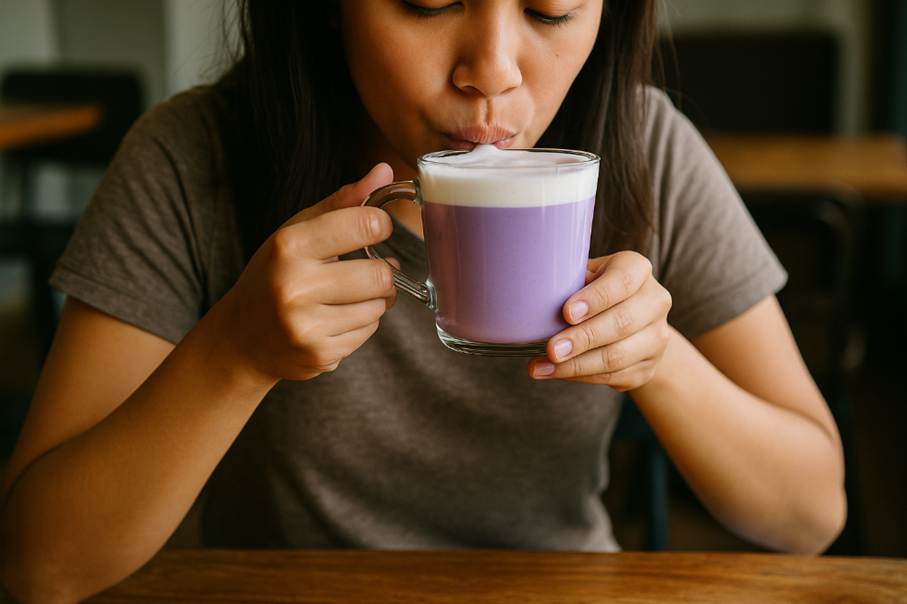
It’s rich, purple, and suddenly showing up in every trendy café menu but what exactly is ube? This purple sensation, especially famous in the form of ube lattes, is more than just a pretty face. Behind the color lies a fascinating ingredient that bridges culture, flavor, and health. With a creamy texture and a naturally sweet, nutty flavor, ube (pronounced “oo-beh”) is taking over both cups and plates around the world. Whether you spotted it on Instagram or in your local coffee shop, understanding the true essence of ube helps you appreciate every sip and bite. Let’s unravel the story of this Filipino staple turned global star.
Understanding ube: more than just a purple yam
The term “ube” refers to a specific type of purple yam native to the Philippines not to be confused with taro or sweet potatoes, although they’re often lumped into the same category. Ube has been a staple in Filipino desserts for centuries, celebrated for both its flavor and its visual appeal. But what makes it different? Ube is a tuber, just like a potato, but with a vibrant violet color and a naturally sweet, almost vanilla-like flavor. Unlike other purple vegetables, it doesn’t need added sugar to be palatable. Its subtle nuttiness and earthy undertone make it a versatile base for a wide range of desserts, pastries, and of course, the ever-popular ube latte.
A growing number of brands and specialty retailers now offer ube in various forms frozen, powdered, jammed making it easier than ever to bring this exotic ingredient into your kitchen. If you’re looking for a high-quality product, this ube powder is a reliable choice for authentic flavor and color. This vibrant root vegetable became a sensation across social media thanks to its naturally photogenic color. But beyond its visual charm, people began to appreciate its taste and even its nutritional profile rich in antioxidants, vitamin C, and dietary fiber. Health-conscious consumers are curious: is ube healthy? The answer is yes when consumed in natural forms and moderate amounts, ube brings both taste and benefits to your diet.
Part of the mystery and confusion around ube stems from its frequent mix-up with taro. While both are used in colorful drinks and desserts, ube is sweeter, denser, and much more vivid in color. If you’ve ever ordered an ube milk tea and thought it tasted like vanilla and pistachio had a baby, that’s the ube charm right there. Culturally, ube has deep roots in Filipino cooking. Known in traditional dishes like ube halaya (a thick jam) or incorporated into cakes and pastries, its rise in Western culture represents a growing appreciation for Southeast Asian ingredients.
See also: Chew Proof Dog Bed: The Ultimate Solution for Persistent Chewers and Healthy Canine Rest
What does an ube latte taste like?
Think of an ube latte as a dessert in a cup, but without being overly sugary. It offers a velvety mouthfeel with layers of sweet, nutty, and vanilla-like tones. The base often made with ube halaya (ube jam), ube syrup, or ube extract is mixed with milk (dairy or plant-based) and sometimes espresso for a caffeinated version. This beverage often draws comparisons to the creaminess of a matcha latte or the nuttiness of a chai, but it really holds its own. Some people describe it as tasting like white chocolate with a hint of pistachio. It’s gentle yet flavorful perfect for those who enjoy unique but not overpowering drinks.
Ube latte vs traditional lattes
The traditional latte leans heavily on coffee flavor. In contrast, an ube latte can be made *without any coffee* at all. This means it’s accessible to people avoiding caffeine or seeking something different. The texture stays the same creamy, rich, and satisfying but the taste profile shifts to something more indulgent and dessert-like.
How it pairs with milk
Ube works wonderfully with various kinds of milk. Almond milk adds a slight nuttiness that complements ube’s flavor. Oat milk brings creaminess without overpowering the drink. Coconut milk common in Filipino cooking enhances the tropical undertones.
How to make an ube latte at home
Making an ube latte at home doesn’t require barista-level skills. With the right ingredients and tools, you can enjoy a café-quality drink from your own kitchen. Here’s what you’ll need:
- ube jam or ube extract
- milk of your choice
- optional sweetener (like honey or condensed milk)
- ice (for iced lattes)
- espresso or brewed coffee (optional)
Start by warming the milk in a saucepan. Add a spoonful of ube jam or a few drops of extract and stir until fully dissolved. If you want a stronger taste, you can also mix in a teaspoon of homemade ube syrup. Pour it over a shot of espresso or simply serve it over ice for a refreshing twist. For a caffeine-free version, skip the espresso. You’ll still get the creamy, sweet flavors of ube without the jolt. Add a pinch of salt to elevate the sweetness a small touch that makes a big difference. This homemade version lets you control the sweetness and strength of the flavor, something store-bought drinks rarely offer.
Why is ube gaining global popularity?
Ube’s rise isn’t accidental. It’s the result of a perfect storm of trends: interest in global cuisine, demand for visually appealing food, and a desire for natural flavors. The moment it hit social platforms like Instagram and TikTok, the ube latte became more than a drink it became a statement. Its electric purple hue grabs attention instantly. People started sharing recipes, experimenting with new forms (ice cream, donuts, pancakes), and exploring the differences between ube vs taro.
Food bloggers and cafés noticed. Soon, major chains began testing ube drinks even Starbucks jumped on board in certain regions. Meanwhile, fans of Filipino food appreciated that an ingredient from their childhood was finally getting the spotlight it deserves. People also care more about where their food comes from. Ube, often grown in smaller, organic farms, aligns with the trend toward ethically sourced and plant-based ingredients. Many consumers now search for where to buy ube powder or ube extract for baking because they want to recreate the magic at home.
Health benefits and nutrition of ube
While it’s often used in desserts, ube carries real health value. Compared to other sweeteners or flavor bases, ube is natural and packed with nutrients. Ube contains:
- High levels of antioxidants, especially anthocyanins (the pigment responsible for the purple color).
- Vitamin C to support immunity and skin health.
- Potassium and fiber for heart and digestive health.
Although ube is naturally sweet, its glycemic index is moderate, especially when used in whole or powdered form. That means it provides energy without the crash. When people ask is ube healthy, the answer is yes especially compared to processed dessert ingredients. It’s a way to enjoy indulgence with benefits, particularly when used in drinks like lattes that don’t require large amounts of sugar or fat.
Ube: a flavor worth discovering
From its roots in Filipino kitchens to your local coffee shop, ube has made a global impact and it’s here to stay. With its beautiful color, versatile flavor, and growing popularity, it invites everyone to try something new, delicious, and even a little nostalgic. Whether you’re sipping on a homemade ube latte or discovering it for the first time, this purple gem has something unique to offer. Have you tried ube yet? If not, it might be time to join the purple revolution.