ByJohn A
7 Creative Ways to Pair Lighting and Texture with Rocks for Fireplace Wall Designs
Key takeaways:
- Layer Lighting: Enhance texture and depth.
- Mix Textures: Create visual interest.
- Choose Stone Colours: Match your lighting.
- Balance Materials: Pair stone with timber or metal.
A fireplace naturally draws attention. Adding the right rocks for fireplace wall designs makes it even more attractive and inviting. However, stone alone cannot create the complete effect. Lighting and texture work together to highlight every detail. They add depth, warmth, and character to the room. Whether you prefer a rustic retreat or a modern interior, combining thoughtful lighting with a decorative rock wall creates a timeless feature.
What Is The Importance Of Texture And Lighting For Fireplace Stone Walls?
Natural and manufactured rocks have unique textures, which is why proper lighting reveals these details and creates attractive shadows. Even premium stone finishes can appear flat without the effect of lighting. Illumination and Texture together create visual depth, which makes the fireplace stand out throughout the day and night. The following table shows the different design elements and the kind of visual benefit it has on the surface.
| Design element | Visual benefit |
| Warm LED lighting | Creates a cozy atmosphere |
| Cool white lighting | Highlights modern interiors |
| Rough stone texture | Adds rustic character |
| Smooth stone finish | Creates contemporary elegance |
| Layered lighting | Enhances depth and dimension |
Table 1: Different elements of designs and their visual importance
How Can You Combine Lighting with Textured Rock Walls?
Here are some design ideas:
1. Warm LED strips along edges
Warm LED strip lighting works beautifully beneath mantels and recessed shelves. The soft glow emphasizes every ridge and contour of the rocks on the fireplace wall. It creates gentle shadows that make the stone appear richer and more natural. This approach works particularly well in living rooms where comfort is the priority. It is ideal for:
- Entertainment walls
- Floating fireplace mantels
- Feature stone panels
- Recessed wall niches
2. Install wall sconces to create dramatic shadows
Wall sconces provide both style and function by positioning them on either side of the fireplace. Their upward and downward beams naturally highlight the uneven texture of the stone. The fireplace gets a constantly changing appearance as the shadows shift slightly throughout the day. Choose warm-colored lighting for traditional interiors and neutral lighting for contemporary spaces.
3. Spotlighting a single feature boulder
It is not essential to light every rock equally. One standout boulder can carry the whole design. A single adjustable spotlight, aimed at an angle, creates a focal point. The rest of the wall fades gently into shadow. This approach pairs well with a custom-built decorative rock wall, where one section is meant to stand out.
4. Backlighting for a silhouette effect
Backlighting places light behind textured panels or slight overhangs. It creates a glow around the rock’s edge. This technique is dramatic but easy to overdo. Backlighting suits fireplace walls with layered or stacked stone profiles. Flat walls don’t give it much to work with.
5. Combining down lighting and up lighting
Using both directions at once creates layered and balanced light. Up lights show off the base texture. Downlights, often recessed in the ceiling or mantel, add depth from above. Taller fireplace walls are suitable for this double approach. It also works well for feature walls that extend floor to ceiling. The table sums up the concept of the direction of light for easy understanding.
| Direction of light | Placement | Purpose |
| Up lighting | Floor or base | Reveal deep texture or shadow |
| Down lighting | Ceiling or mantel top | Soften hard shadows and add a glow. |
Table: direction of light with placement and purpose
6. Combine metal, timber, and stone textures
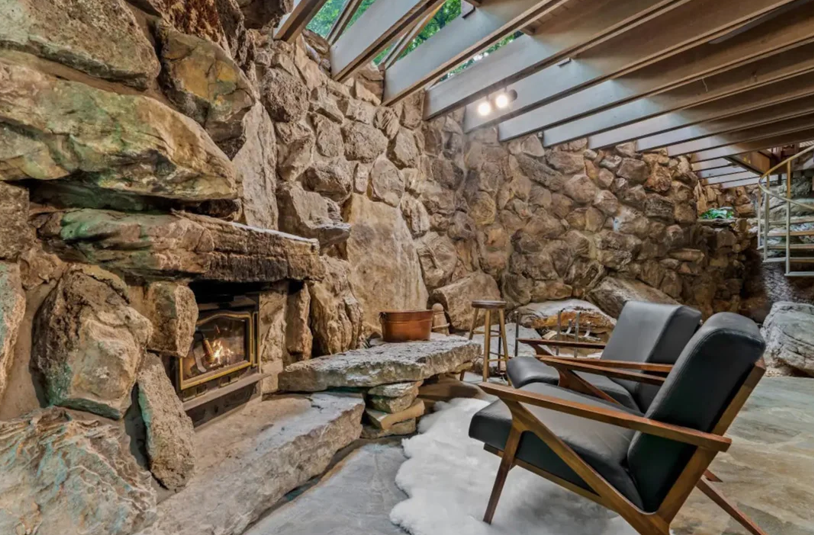
Pairing stone with complementary materials makes it more attractive. The ruffed appearance of the stone is softened by natural timber. Modern contrast and visual balance are ensured by black steel, which creates a sophisticated fireplace without excessive decoration. Many Australian homes achieve the timeless look by combining steel frames, timber beams, and textured rocks for fireplace wall installation.
7. Select a stone colour that complements well to right
All stones do not react the same way in specific light. Rooms appear larger as light coloured stones reflect more light. Stones of dark colour provide a luxurious and bold atmosphere as they absorb more light. Always consider the amount of natural daylight in the room while selecting materials for a decorative rock wall.
| Colour of the stone | Lighting effect | Suitable style |
| Light grey | Spacious and bright | Scandinavian |
| Beige | Inviting and warm | Traditional |
| Charcoal | Dramatic and bold | modern |
| Mixed earth stones | Natural variation | rustic |
Table: pairing of specific stone colour and lighting
Conclusion
A fireplace should feel warm, welcoming, and visually impressive. The right combination of lighting and texture transforms ordinary stone into an unforgettable design feature.
Whether you prefer natural elegance or contemporary simplicity, thoughtful planning makes all the difference. By pairing quality rocks for fireplace wall installations with layered lighting, contrasting textures, and complementary materials, you can create a decorative rock wall that remains beautiful for years while becoming the true centerpiece of your home.
Bring Your Fireplace Vision to Life
Your fireplace deserves more than ordinary design. Choose thoughtfully crafted stone textures and smart lighting combinations to create a stunning focal point that adds warmth, style, and lasting value to your living space.